White Paper · Version 2.0 · March 2026 · Confidential
Sports RWA
Marketplace
A Premium Marketplace for Authenticated Sports Collectibles

Kobe Bryant · Signed Finals Photo · PSA Authenticated
A Premium Marketplace for Authenticated Sports Collectibles
Kobe Bryant · Signed Finals Photo · PSA Authenticated
Sports RWA Marketplace is a premium, authenticated collectibles marketplace built for the intersection of fandom, trust, and modern ownership infrastructure.
The global market for sports memorabilia exceeds $26 billion annually and is growing. Yet the dominant experience for collectors today is fragmented, trust-deficient, and poorly served by technology. Auction sites, dealer networks, and social resale channels each solve part of the problem — none of them solve it well enough to convert casual fans into confident buyers, or occasional buyers into committed collectors.
Sports RWA Marketplace is built to close that gap. It combines three architectural layers that, taken together, represent a meaningfully differentiated platform:
Layer 1. A collectible-first commerce experience that puts authenticated physical objects — not instruments, tokens, or synthetic exposure — at the center of every interaction.
Layer 2. A dual ownership model that supports both direct purchase of a full authenticated item and fractional acquisition of shares in a single authenticated collectible, enabling access to grail-tier assets at any entry point.
Layer 3. A persistent AI collector companion that lives inside the product, adapts to the user's taste and ownership history, and materially reduces the research friction that prevents conversion in high-consideration categories.
The platform is not a financial exchange, a speculative instrument, or a generic tokenization layer. It is a trusted, image-led, AI-assisted marketplace for authenticated real-world objects — built for collectors who care deeply about what they own.
This document presents the strategic rationale, product architecture, ownership model, authentication framework, user journeys, go-to-market approach, business model, and competitive defensibility of Sports RWA Marketplace. It is prepared for investors, strategic operators, and institutional partners who are evaluating the opportunity to build or participate in the next generation of sports collectibles commerce.
Why Sports Collectibles Are a Compelling RWA Category
Real-world asset tokenization has attracted enormous attention as a structural shift in how ownership of physical and financial assets is registered, transferred, and held. Most of that attention has concentrated on financial instruments — real estate, private credit, infrastructure, commodities. Sports collectibles represent a different and in some ways more compelling RWA category, resting on five structural properties:
A game-worn jersey from a championship game exists once. A signed photo from a historic moment has a defined population. Unlike financial instruments, which can be issued in arbitrary quantity, sports collectibles carry intrinsic supply constraints tied to real athletic events. This scarcity is not manufactured — it is structural, verifiable, and emotionally resonant.
Sports fandom is among the most durable and identity-defining forms of consumer allegiance. Fans do not merely enjoy their teams — they inherit them, name children after players, and organize social communities around shared loyalties. Authenticated objects connected to iconic moments carry emotional value that appreciates with cultural memory rather than depreciating with time.
The most iconic sports collectibles have demonstrated price appreciation across multi-decade time horizons that compares favorably to many traditional asset classes. A Honus Wagner T206 card, a Muhammad Ali fight-worn glove, or a Pelé-signed match shirt does not merely retain value — it compounds it as cultural distance from the original event grows.
Unlike fine art or rare wine, sports collectibles span an enormous price range — from ticket stubs priced at tens of dollars to game-worn championship artifacts priced in the millions. Fractional ownership mechanics extend access further, enabling participation in grail-tier assets that would otherwise be available only to elite collectors.
Perhaps the most commercially important characteristic of sports collectibles is that demand is strongly trust-activated. Collectors do not hesitate because they lack interest — they hesitate because they lack confidence in authenticity, provenance, and the fairness of pricing. A platform that materially reduces that friction can unlock latent demand that currently sits unexpressed across the fan base.
Despite its scale and growth trajectory, the sports collectibles market remains poorly served by existing platforms. The structural problems fall into three categories:
Today's collector must navigate auction houses, direct dealer relationships, eBay listings, Instagram dealers, pop-up shows, and private networks to develop a meaningful view of what is available. No single platform offers a curated, trusted, image-quality inventory across sports, eras, and item types. The discovery experience is not merely inconvenient — it is a meaningful barrier that prevents casual fans from entering and discourages intermediate collectors from scaling up.
Authentication exists in the market. PSA, Beckett Authentication Services, JSA, and others have built credible third-party verification infrastructure. The failure is not in the existence of authentication — it is in the legibility of that authentication inside the purchasing experience. Certificates arrive as PDFs. Provenance is buried in listing footnotes. Condition grading is expressed in jargon opaque to new buyers.
A buyer considering a $2,500 signed jersey faces a multi-hour research task before feeling confident enough to purchase: validating authentication, researching the player's career significance, comparing similar listings across platforms, understanding what condition grading means in practice, and forming a view on fair value. This research burden falls entirely on the buyer, with no structured assistance. The result is abandonment.
The convergence of three trends creates an unusually wide opportunity window:
The winning platform in this window will be the one that makes authenticated, curated sports collectibles as easy and confident to purchase as any other premium consumer category. Sports RWA Marketplace is designed to be that platform.

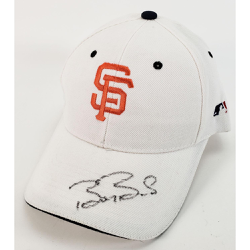

The product is built around one organizing principle: the collectible is always the center of value. Every architectural decision — navigation, imagery, authentication display, AI interaction, ownership mechanics — flows from that principle.
This is a deliberate counter-positioning to platforms that treat memorabilia as an asset class and lead with financial framing. For Sports RWA Marketplace, the signed photo, the game-worn jersey, the iconic ticket stub — these are not instruments. They are objects. They carry history, memory, and cultural meaning. The platform's job is to make that meaning visible and the ownership of it trustworthy.
The marketplace is structured as a clean browse-to-buy loop with six primary surfaces, each designed to serve a specific function in the collector journey:
| Surface | Function & Design Intent |
|---|---|
| Home | Routes users immediately into high-quality collectible imagery. Functions as a visual front door — editorial, curated, and sports-cultural in tone. Trending objects, featured sports categories, and personalized shelf recommendations defined by the user's collector profile. |
| Marketplace | The image-led browsing surface. Filtered by sport, player, era, item type, ownership mode (direct or fractional), and price tier. Designed to surface the density of inventory without overwhelming the collector. Visual quality is a primary UX constraint. |
| Collectible Detail | The trust and conversion surface. High-resolution imagery, full authentication documentation, condition grade and narrative, provenance story, ownership mode selection, and AI companion activation. Every element is designed to increase buyer confidence and reduce friction to purchase. |
| AI Companion | A persistent, context-aware advisor accessible from any surface. Maintains the collector's profile across sessions. Answers questions about provenance, authentication, ownership mechanics, and sports history. Adapts depth and tone to the user's demonstrated sophistication. |
| Checkout | Wallet-native, minimum-friction transaction flow. Presents ownership terms, authentication summary, and — for fractional purchases — share structure and vaulting arrangement. Designed to complete the transaction without introducing new uncertainty. |
| My Collection | The loyalty and retention surface. Displays owned items and fractional positions with authentication records, estimated value context, and companion-generated collection development suggestions. The surface that converts a buyer into a collector. |
The platform is built on three infrastructure layers that are invisible to the user but essential to the product's core value proposition:
Two modes of ownership. One collectible-first experience.
Sports RWA Marketplace supports two distinct ownership modes, each designed to serve different collector profiles, capital positions, and relationship styles with the objects themselves. Both modes share a single underlying principle: the authenticated physical collectible is the asset — not a representation of it, not an index linked to it, not a financial derivative of it.
Direct ownership is the clearest and most emotionally satisfying ownership mode. The buyer purchases the full authenticated physical item — the complete jersey, the actual signed photograph, the original game-worn equipment. Upon purchase completion, ownership of the physical item transfers in its entirety. The item can be held in secure, climate-controlled vaulting facilities, shipped to the buyer at request, or displayed in private collections.
Direct ownership is the dominant mental model of the marketplace and should receive the majority of UI emphasis. It requires no explanation of financial mechanics, no framing around share structures, and no context that might confuse the emotional simplicity of the transaction. Direct ownership listings are the primary supply vehicle for the marketplace.
Fractional ownership addresses a genuine access problem: the most significant sports collectibles — championship rings, Hall of Fame game-worn items, iconic multi-player signed memorabilia — can trade at price points that place direct ownership out of reach for the overwhelming majority of collectors. A grail-tier authenticated LeBron James championship ring may price above $150,000. A Pelé-signed match shirt from a World Cup final can trade above $30,000.
Fractional ownership resolves this by enabling the tokenization of a single authenticated collectible into a defined number of shares, each representing a proportional ownership interest in the physical item. The physical object remains secured in authenticated vaulting. Each share represents a documented and verifiable fractional interest in that specific item.

The dual ownership model creates an obligation of clarity that must be met at the product level, not deferred to legal disclaimers. Users must understand before and during any purchase what type of ownership they are acquiring, what the physical disposition of the item is, what their rights are with respect to display, transfer, and sale, and what the differences are between direct and fractional positions.
Ownership complexity is resolved through design, not disclaimers. The AI companion, the collectible detail page, and the checkout flow each carry responsibility for ensuring that no user proceeds to transaction without a clear understanding of what they are acquiring.
In the sports collectibles market, trust is not a feature — it is the product. A collectible without authenticated provenance is not merely a less valuable object; in many cases, it is worthless. The $10 million market for authenticated sports memorabilia exists precisely because authenticated items are categorically different from unauthenticated ones, and buyers will pay significant premiums for that difference.
The challenge is not that authentication infrastructure is absent. PSA, Beckett, JSA, and other recognized authenticators have spent decades building credible verification systems. The challenge is that this infrastructure is disconnected from the purchase experience in ways that systematically reduce buyer confidence and suppress conversion.
Every item listed on Sports RWA Marketplace must carry authentication from a recognized third-party service before it appears in the marketplace. The platform does not perform its own primary authentication — it operates as a curation and presentation layer that requires third-party authentication as a listing prerequisite.
Authentication documentation is presented directly on the collectible detail page — not as a downloadable attachment, not as a link to an external site, but as an integrated surface within the item's primary display. This includes:
Authentication confirms that an object is what it is claimed to be. Provenance tells the story of what that object means — where it was, who held it, what moment it witnessed. Provenance is the layer that converts authentication (a trust signal) into emotional resonance (a purchase driver).
Sports RWA Marketplace treats provenance as a content discipline, not a compliance checkbox. Each collectible detail page includes a provenance narrative that contextualizes the item within its sports-cultural moment: the game it was worn in, the record that was broken, the championship it commemorated, the athlete who created it.
Ownership records — both direct and fractional — are registered on-chain at the time of transaction. This creates an immutable, transferable record of ownership that is independent of the platform's own database. The blockchain layer serves three functions in the trust architecture:
The blockchain layer is infrastructure, not product. Users experience wallet sign-in as a simple identity mechanism, not as a crypto onboarding event. The technical sophistication of the ownership rail is invisible to the user; its benefits — security, permanence, transferability — are felt without being explained.
Sports collectibles are a high-consideration purchase category. The typical buyer path from discovery to purchase involves multiple research sessions, cross-platform price comparison, authentication verification, player biography review, and some assessment of cultural or investment value. This research burden is not incidental — it is the primary reason that conversion rates in this category are structurally low, even among buyers who are emotionally ready to own.
The AI companion is designed to absorb the research burden that currently sits on the buyer, delivering contextual, personalized, and trustworthy guidance at the moment it is most needed: inside the purchase flow, on the collectible detail page, during the decision between direct and fractional ownership, and at checkout.
This is categorically different from generic chatbot support or FAQ interfaces. The companion maintains knowledge of the user's collection history, stated preferences, and engagement patterns. It adapts its explanations to the user's demonstrated level of collector sophistication. It remembers what the user has asked before. It is, in product terms, a persistent expert advisor who knows you and knows the category.
The AI companion is defined by two distinct identity layers:
The collector profile captures the user's preferences, ownership history, taste orientation, and trust thresholds. It defines which sports they follow, which players matter to them, what era of collectibles resonates, and how much research depth they want before a purchase decision. This profile is built incrementally — through expressed preferences, browsing behavior, purchase history, and occasional explicit curation — and becomes the personalization foundation for every surface in the marketplace.
The companion profile defines the AI's communication style, depth of explanation, and functional scope. By default the companion is knowledgeable, conversational, and direct. Users can calibrate it toward deeper historical analysis, lighter casual engagement, or focused price comparison. The companion does not push, upsell, or act as a marketing vector. Its function is to increase buyer confidence and reduce research friction — not to manufacture urgency.
The companion can narrate the cultural and historical significance of any listed collectible in context-appropriate depth — from a brief paragraph for casual browsers to a detailed biographical and event-level explanation for serious collectors. This is the capability that most directly converts authentication documentation into emotional purchase motivation.
When a user is considering multiple items — comparing two signed jerseys from the same player, or evaluating a direct purchase against a fractional position in a higher-value item — the companion can perform structured comparison across authentication, condition, provenance, price, and item significance. This replaces the multi-tab research sessions that currently characterize high-consideration collectibles purchases.
The companion explains, in plain language and without financial jargon, the practical differences between direct and fractional ownership for any specific item. It answers questions about vaulting, physical access, transfer rights, and share structure in the context of the specific transaction the user is considering — not as generic platform documentation.
Calibrated to the collector profile, the companion surfaces items and categories that match the user's taste, history, and expressed interest. Recommendations are not algorithmic noise — they are contextual, explained, and anchored in the user's stated preferences.
The companion can answer sports knowledge questions — player career summaries, game-level context, historical championship records, cultural significance of specific moments — that help collectors understand why an item matters before they decide whether to own it. In a category defined by emotional and cultural value, sports knowledge is a direct conversion asset.
Research friction is the primary cause of cart abandonment and consideration-without-purchase behavior in high-consideration commerce categories. An AI companion that absorbs research burden directly reduces the friction that prevents purchase. Platforms that have implemented contextual AI assistance in comparable high-consideration categories report conversion improvements of 20–40% on assisted sessions versus unassisted browsing. In a $26 billion category with structurally low conversion, even modest improvement in assisted conversion represents meaningful revenue uplift.
The more significant long-term value of the companion is its role in collector retention. A collector who has established a profile, built a collection, and developed a relationship with a companion that understands their taste is materially harder to re-acquire on a competing platform than a first-time buyer. The companion becomes a personalized institutional knowledge layer — it knows what you own, what you've considered, and what you're likely to value next. This creates switching costs that are qualitative and personal rather than merely financial.
The persistent AI companion is not a support cost — it is a revenue-generating infrastructure layer. Every session where the companion reduces research friction, explains a provenance, or guides an ownership decision is a session where a purchase that would otherwise have been deferred becomes a purchase that happens.
Five stages. One compounding loop.
The core product loop is designed to be self-reinforcing: each completed journey increases the collector's depth of engagement, the platform's knowledge of their taste, and the companion's capacity to assist them more precisely on the next session.
Entry points include the Home feed (editorial, curated, visually led), the Marketplace (filtered browsing), and Trending Sport feeds (moment-driven discovery tied to current sports events and cultural cycles). The user encounters high-quality collectible imagery immediately — there is no text-heavy onboarding between the entry point and the visual inventory.
When a collector opens a collectible detail page, they enter the trust and conversion surface. High-resolution item imagery, authentication documentation, condition grade and narrative, provenance story, and ownership mode options are all presented within a single scrollable context. The AI companion activates in this context — available to answer questions, explain authentication, narrate provenance, and compare with similar listings.
The companion exchange on the detail page is the highest-leverage moment in the funnel. A collector who engages with the companion is signaling serious consideration. The companion's job at this moment is not to close the sale but to close the information gap: answer the specific questions holding the collector back, compare the item against alternatives, and explain the ownership mechanics with specificity and clarity.
The checkout flow is wallet-native and designed for minimum friction. The collector connects a supported wallet — experienced as a simple sign-in, not a crypto onboarding event — reviews the ownership terms, receives a final authentication summary, and completes the transaction. For fractional ownership purchases, the share count, proportional interest, and vaulting arrangement are presented clearly before confirmation.
My Collection is the loyalty and retention surface. It displays the full inventory of owned items and fractional positions, with authentication records, estimated value context, and collection development suggestions from the companion. Each cycle through the loop deepens the collector's relationship with the platform and increases both the companion's accuracy and the collector's propensity to transact again.
Sports RWA Marketplace should not be introduced to the market as an RWA platform, a tokenization layer, or a blockchain product. It should be introduced as a premium sports collectibles marketplace with authenticated provenance, modern ownership infrastructure, and AI-assisted buying — where the collectible is always the point.
The positioning distinction matters enormously for early adoption. The addressable market for "authenticated sports collectibles with AI assistance" is orders of magnitude larger than the addressable market for "sports RWA tokens." The former speaks directly to collectors, fans, and sports enthusiasts. The latter speaks to a narrow crypto-native audience that is neither the largest opportunity nor the most commercially durable one.
Launch framing: "The most trusted place to discover and own authenticated sports memorabilia." Every other capability — fractional ownership, AI companion, blockchain registration — is a supporting feature of that primary positioning, not a competing headline.
The initial market entry should be deliberately narrow and high-quality. Broad, noisy inventory is the enemy of trust in a market where trust is the product. Phase One should establish the platform's premium credibility through:
The first and most important demand channel is direct engagement with existing collector communities — PSA Registry members, hobbyist forums, sports card communities, and established memorabilia collector networks. These are buyers who already understand and value authenticated collectibles; the platform's job is to offer them a materially better experience than they currently have.
The provenance narratives produced for listed items are also content assets. Publishing editorial content around iconic collectibles — the story of a specific jersey, the context of a championship game, the biography of a player whose items are in inventory — builds organic discovery and positions the platform as a culturally authoritative voice in sports heritage.
Strategic supply partnerships with athletes, agencies, teams, and major sporting events create authenticated inventory supply that cannot be replicated by competitor platforms. Exclusive or first-access supply arrangements are a meaningful acquisition driver, particularly for fractional offerings where item scarcity creates natural urgency.
The AI companion itself is a differentiated acquisition asset. "Ask anything about any sports collectible" is a discovery mechanism — both for the specific items in inventory and for the category broadly. A collector who uses the companion to research a collectible they are considering elsewhere and gets a materially better answer will be drawn toward purchasing through the platform that provided that assistance.
Subsequent expansion from the basketball and soccer wedge follows a sequenced logic based on fan density, collector community maturity, and supply availability:
American football (NFL), baseball (MLB), and tennis — categories with mature collector communities, established authentication infrastructure, and strong global awareness.
Additional Olympic sports, golf, cricket, and motorsport — international expansion driven by fan community geography and regional supply partnerships.
Expanded fractional offerings, collector community layers, secondary market functionality for owned items, and institutional supply channel development.
The primary revenue model is a transaction fee applied to each completed purchase — both direct ownership and fractional share acquisitions. Fee structures are benchmarked against the broader authenticated collectibles market, where auction house commissions typically range from 10–25% of hammer price. Sports RWA Marketplace targets a buyer's premium and seller's fee structure competitive with digital-first platforms while reflecting the trust and discovery premium the product provides.
Physical items — both directly owned items held on behalf of collectors and fractionally owned items underlying shared positions — require secure, climate-controlled, insured vaulting. Vaulting fees are assessed on an annual basis and scale with item value and storage requirements. For fractional items, vaulting costs are distributed proportionally across share positions.
For sellers without existing authentication documentation, the platform can facilitate authentication through preferred third-party partnerships. Authentication facilitation fees cover the cost of engaging certified authenticators and processing documentation. This service expands the supply of authenticated inventory available to the marketplace.
A premium membership tier provides enhanced access to new listings before public availability, elevated companion capabilities, priority customer service, and reduced transaction fees. Premium membership is priced to reflect the meaningful advantages of first-look access in a scarcity-driven category.
The health of the business is measured through a set of layered metrics that track both transactional performance and the compounding retention dynamics that define platform value:
The sports collectibles business model compounds in a manner distinctive to the category. Unlike pure e-commerce, where a repeat buyer is simply a customer who returned, a repeat buyer in authenticated collectibles is a collector — someone who has developed an ongoing relationship with the category, the platform, and the companion. Collector relationships deepen with time: collections grow, preferences sharpen, and the companion becomes an increasingly accurate and valuable advisor.
This compounding dynamic means that the marginal value of a long-term collector is significantly higher than their transaction history alone would suggest. A collector who has built a ten-item authenticated collection over three years and engages with the companion twice a month is an asset of a fundamentally different class than a single-transaction buyer — and the platform's ability to identify, develop, and retain that class of user is the core source of sustainable competitive advantage.
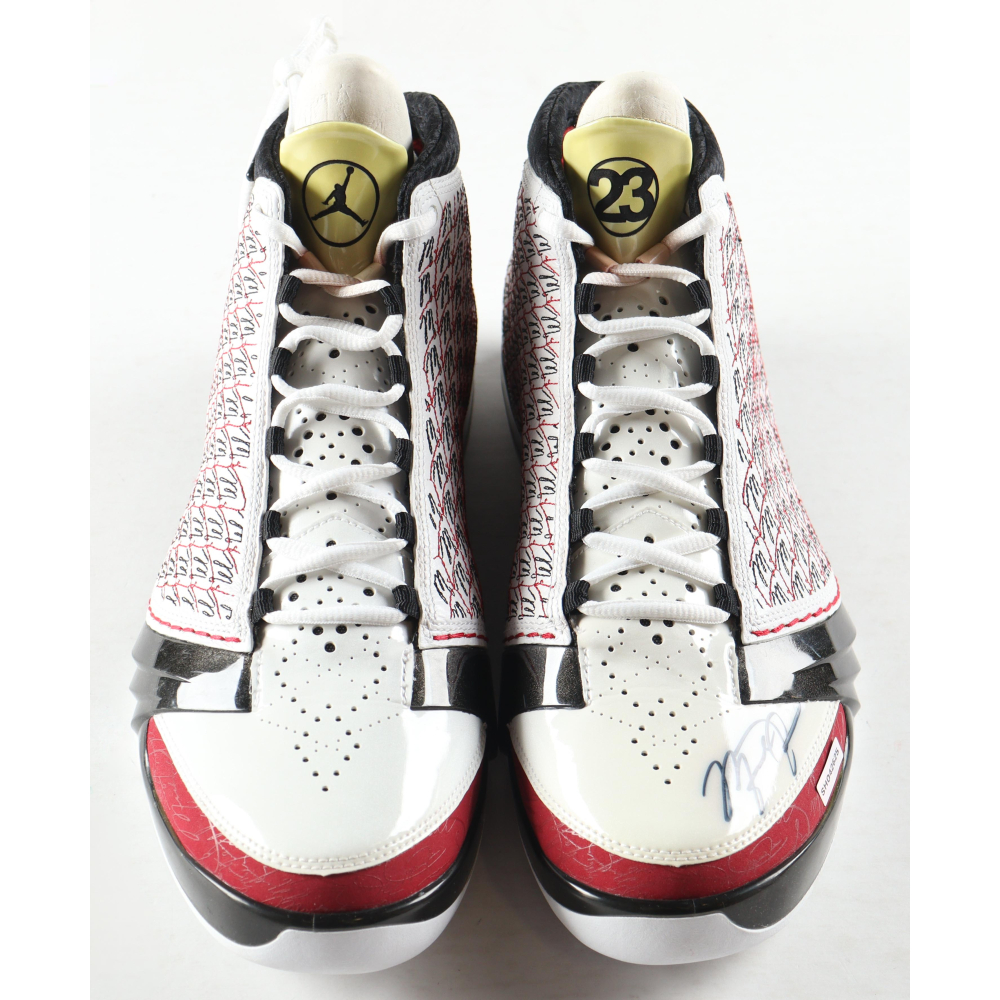
Sports RWA Marketplace's competitive position rests on four reinforcing layers of defensibility. Each layer is independently valuable; together, they create a compound moat that becomes progressively harder to replicate as the platform matures.
In the authenticated collectibles market, supply quality is the first and most durable advantage. Relationships with recognized authenticators, preferred authentication partnerships, athlete and agency supply agreements, and event-linked provenance arrangements create an inventory advantage that is difficult and slow for competitors to replicate. Supply credibility is not built through technology — it is built through institutional relationships developed over time.
Every interaction between a collector and the platform — every item viewed, compared, discussed with the companion, purchased, and held — generates profile data that makes the companion more accurate and the discovery surface more relevant. This data does not transfer to competing platforms. A collector who has built a meaningful profile over twelve months of engagement faces a material switching cost that is personal and qualitative: the next platform would not know them, would not know their collection, and would not be able to provide the same quality of advisory assistance.
The quality of the AI companion is a function of the provenance and authentication content that underlies it, the sports knowledge it can access, and the collector profile data that shapes its personalization. A companion that has been trained on years of authenticated inventory data, refined by millions of collector interactions, and calibrated to individual user profiles is not replicable by a new entrant with a generic AI layer. The companion improves with scale in ways that create a durable quality advantage.
In a category defined by forgery risk and trust deficits, a platform's reputation for authentication quality is an asset that accumulates slowly and would be destroyed rapidly by a single high-profile failure. A platform that establishes and maintains a reputation for rigorous authentication standards, accurate condition grading, and transparent provenance builds a trust premium that affects both buyer willingness to pay and seller willingness to list. This reputation is not replicable by a new entrant — it must be earned through demonstrated performance over time.
Existing platforms in the memorabilia market are defensible on inventory breadth but not on experience quality. eBay has volume but no curation, no authentication standard, and no AI layer. Heritage Auctions and Sotheby's have authentication credibility but no persistent digital product, no fractional access, and no AI companion. Fanatics has distribution and licensing relationships but limited authenticated vintage inventory and no collector intelligence layer.
The opportunity gap is not in building a bigger auction house or a larger marketplace. It is in building the most trusted, most intelligent, most collector-centric experience in the category — a platform that turns authenticated inventory into a personalized collector relationship, not merely a transaction.
Sports RWA Marketplace is positioned to define a category that does not yet fully exist: a premium, authenticated, AI-assisted marketplace for real sports collectibles — where the objects are genuine, the ownership is clear, the trust is legible, and the buying experience is intelligent enough to serve both first-time collectors and serious enthusiasts with equal confidence.
The opportunity is large because the underlying category is large, emotionally powerful, and structurally underserved. The market for authenticated sports memorabilia has never had a product that truly solved the trust and research friction problems that suppress conversion and limit collector development. The enabling technologies — blockchain-native ownership rails, persistent AI companions, high-quality digital inventory surfaces — now exist at sufficient maturity to deploy in a consumer-grade product.
The strategic requirements for success are clear and achievable:
If the product remains collectible-first, trust-first, and collector-first at every decision point, the RWA infrastructure and AI layers become what they are designed to be: multipliers of a fundamentally compelling commerce experience — not the product itself.
Sports RWA Marketplace invites investors, strategic operators, and institutional partners who share this vision to engage in direct conversation about participation, partnership, and the construction of this platform.